On February 17, 2026, TU Wien and CTSi hosted the NCP:IP Women*Networking event, which took place under the title “Social Innovation in Practice: Technologies in the Context of Societal Challenges.” The venue was the historic Böcklsaal, an ideal setting for a meeting dedicated to the exchange of ideas on socially relevant innovation issues.
The NCP:IP Women* Network aims to connect women* working in the fields of intellectual property, knowledge valorization, and innovation ecosystems, and to provide them with a space for professional exchange. The network meets several times a year at different host institutions and brings together women* from science, business, and administration. We were therefore all the more delighted that this year’s meeting was able to take place at TU Wien.
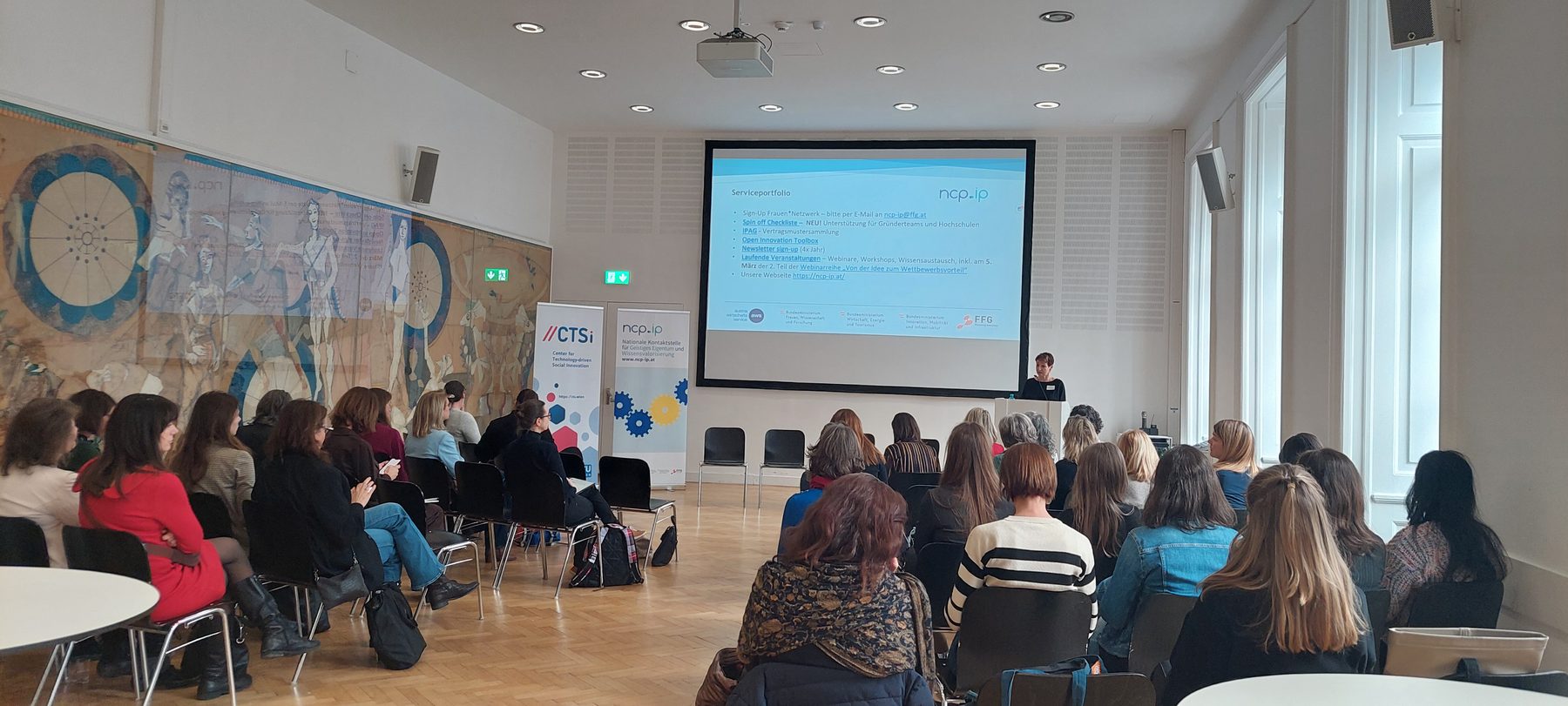
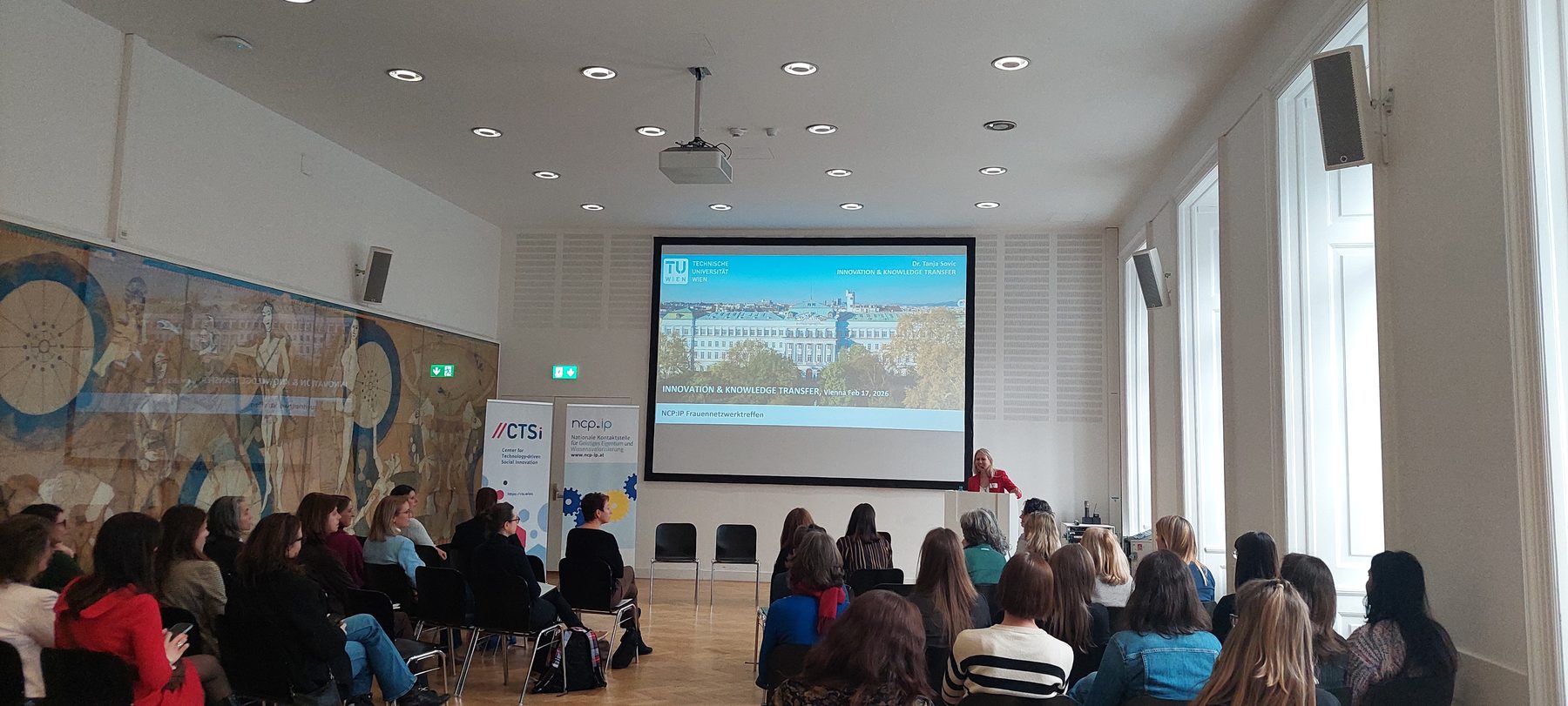
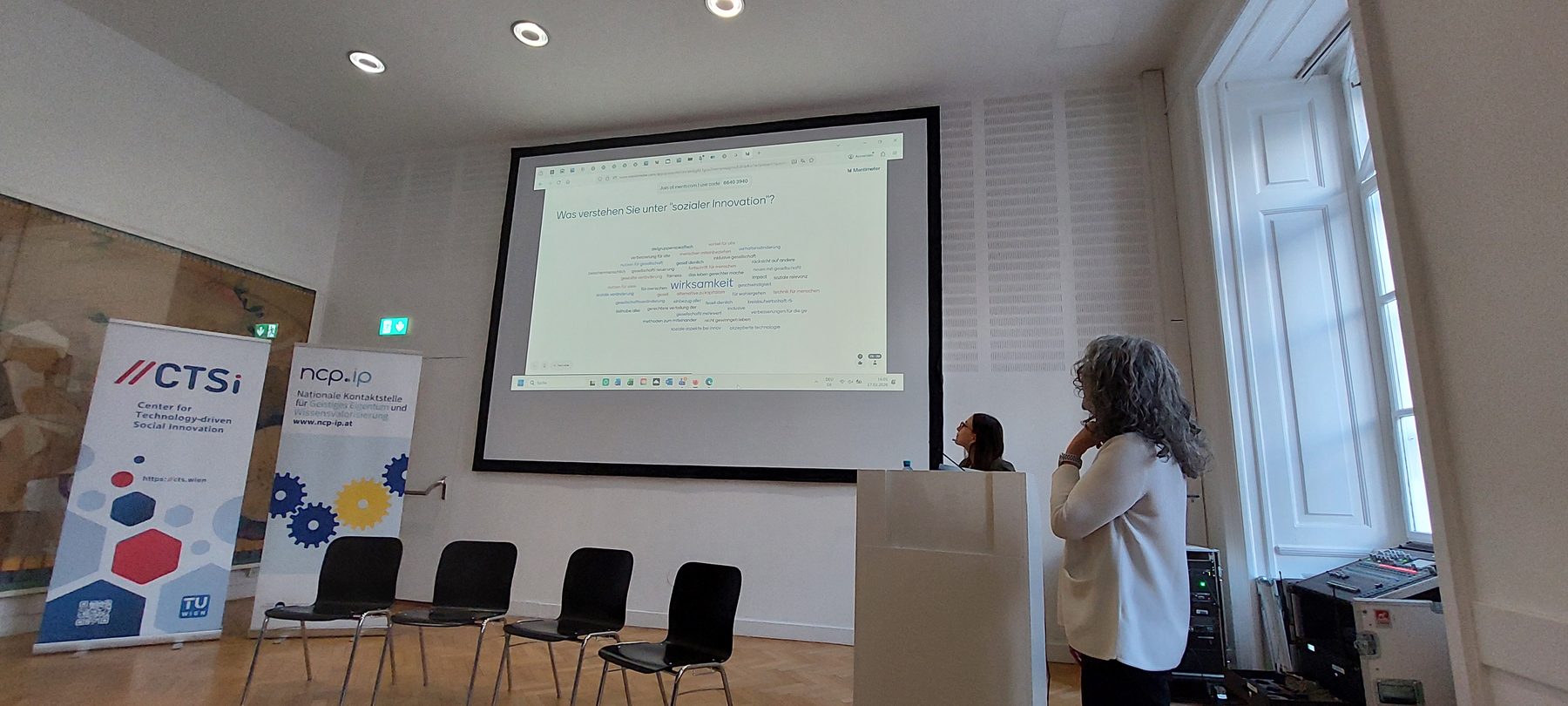
Elisabeth Hajicek, Program Manager of NCP:IP, opened the event and warmly welcomed the participants. This was followed by two groundbreaking introductions by Tanja Sovic, Head of Innovation and Knowledge Transfer at TU Wien, and Margit Noll, Head of European and International Programs at FFG. Both established the connection between the social responsibility of research institutions and the goals of NCP:IP and emphasized the important role that women* play in the innovation landscape.
Anna Franzkowiak, Organizational Director of the Center for Technology-driven Social Innovation (CTSi), then presented the CTSi’s working methods and vision. The CTSi combines technology-driven innovations with social impact by bringing together different disciplines, communities, and actors in joint research and development processes. As a place where knowledge, methods and technologies are further developed through exchange, the CTSi thus exemplifies one of the eight strategic objectives of TU Wien: to position itself as a leading institution for this exchange.
Matthia Link (CTSi) then introduced the topic of social innovation. Hilda Tellioğlu (Academic Director of CTSi) took over the presentation and established the link between social innovation and technology-driven social innovation. Based on theoretical models, she highlighted how technological developments can enable, accelerate, or challenge new social practices. Using vivid examples from everyday and work contexts, she showed how digital technologies change existing routines, open up new spaces for action, and at the same time create structural tensions.
She placed particular emphasis on the need for transdisciplinary and interdisciplinary cooperation. This is a core idea that TU Wien itself pursues through its strategic goal of systematically strengthening creativity and an innovation culture. She explained why technology-driven social innovation can only succeed if different bodies of knowledge, methods, perspectives, and disciplines are involved from the start and have the space and time to negotiate and truly work together. At the same time, she highlighted the challenges that this entails: the development of common spaces for understanding, different quality and evaluation logics, and institutional frameworks that are often not geared towards interdisciplinary processes.
The content part was rounded off by a short panel discussion, moderated by Anna Franzkowiak, between Hilda Tellioğlu, Matthia Link, and Ute Stadlbauer, head of the Entrepreneurship Department at aws, who contributed a funding practice-oriented perspective. The focus was on the challenges faced by applicants, in particular the growing importance of impact logic, indicator measurements, and the comprehensible presentation of interdisciplinary approaches. The discussion clearly showed how challenging it is to map complex innovation processes in funding-logic structures and how valuable the interaction between different institutions is for their further development.
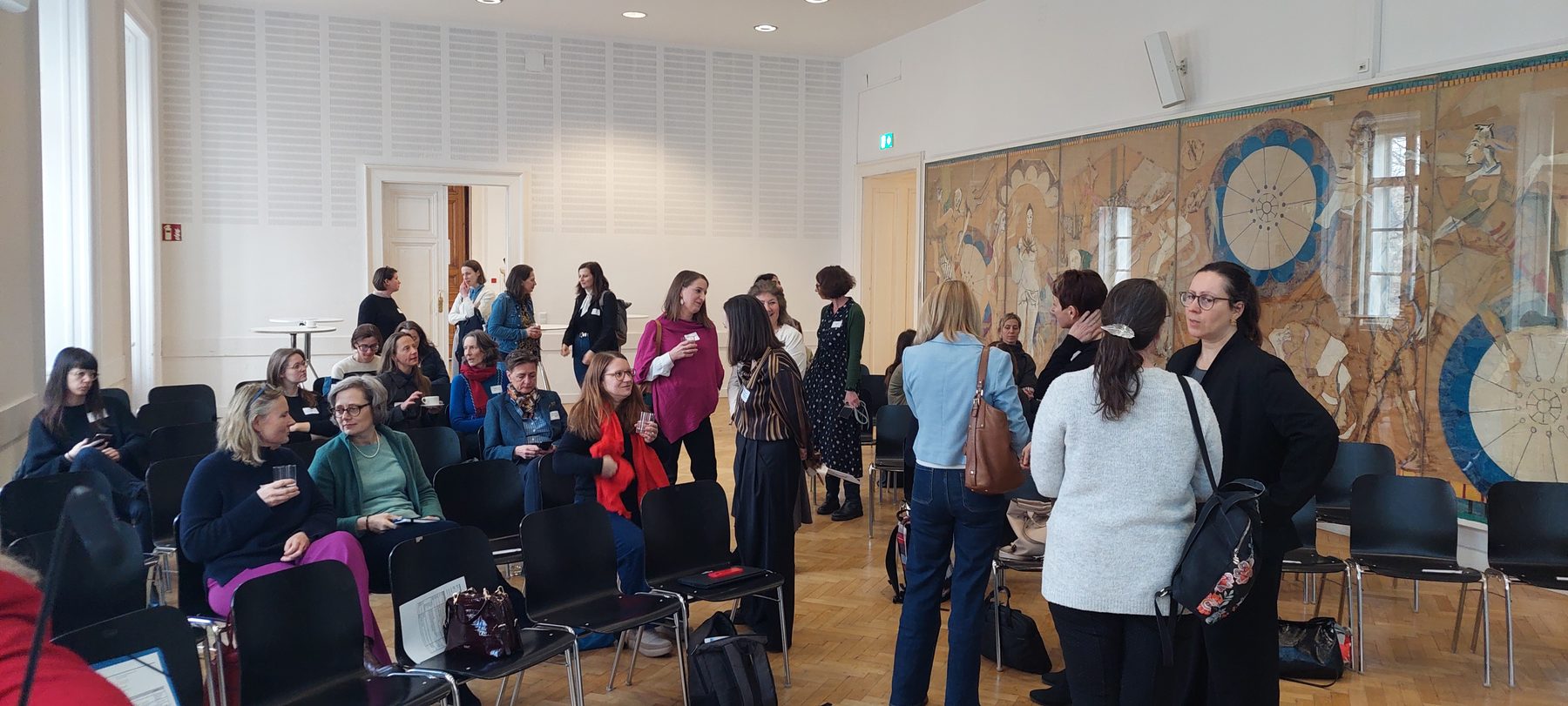
Afterwards, participants took the opportunity to continue the discussion over a delicious buffet, exchange experiences, and make new contacts. This open atmosphere allowed them to further explore the topics of the presentation, reflect together, and initiate potential future collaborations. In line with TU Wien’s strategic goals, such encounters make an important contribution to connecting diverse stakeholders and strengthening the exchange of knowledge across institutional and disciplinary boundaries.
We would like to express our sincere thanks for the positive feedback from the participants, for the diverse contributions, the inspiring discussions, and the excellent cooperation with the NCP:IP Women*Network. An equally big thank you goes to the representatives of FFG and aws, who contributed their expertise on funding perspectives.
The CTSi and TU Wien look forward to future collaborations, new joint initiatives, and further expanding the contacts made at the network meeting. The event also highlights key strategic goals of TU Wien: strengthening the exchange of knowledge, methods, and technologies; fostering innovative and interdisciplinary collaboration; and further expanding networks with national and international partners. In doing so, it also enhances TU Wien’s visibility as a hub for technological and societal innovation.